How margin works in futures trading is essential for anyone looking to navigate the complexities of the futures market. Margin allows traders to leverage their investments, increasing potential profits while also heightening risks. Understanding how margin operates, including its different types and implications, is crucial for successful trading.
In this overview, we will break down the significance of margin in futures trading, explore the various types of margin, and delve into the calculations and requirements that traders need to consider. Armed with this knowledge, you’ll be better prepared to make informed trading decisions.
Understanding Margin in Futures Trading
Margin plays a crucial role in futures trading, acting as a financial safeguard that allows traders to control larger positions with a smaller amount of capital. It essentially represents the collateral required to open and maintain a futures position, reflecting the trader’s commitment and risk tolerance. Understanding how margin works is vital for anyone looking to engage in futures markets, as it influences both potential profits and losses significantly.Margin in futures trading is classified into two main categories: initial margin and maintenance margin.
The initial margin is the amount required to open a new position, set by the exchange and typically expressed as a percentage of the total value of the position. This upfront capital serves as a buffer against potential losses and ensures that traders have skin in the game. Conversely, the maintenance margin is the minimum amount of equity that must be maintained in a trader’s account to keep an open position.
If the account balance falls below this threshold due to market fluctuations, the trader will receive a margin call, necessitating the deposit of additional funds to maintain the position.
Types of Margin in Futures Trading
Understanding the types of margin is essential for managing risk effectively. The two key types, initial and maintenance margins, serve different functions in the trading process. Here’s a closer look at their significance:
- Initial Margin: This is the upfront deposit required to open a futures position. It varies depending on the asset and market conditions. For example, if a futures contract is valued at $50,000 and the initial margin requirement is set at 10%, a trader would need to deposit $5,000 to engage in that contract.
- Maintenance Margin: This is the minimum equity that must be maintained in a trading account to keep a futures position open. If the equity falls below this level due to price movements, the trader will face a margin call. For instance, if the maintenance margin is set at $4,000 and the market value of the position declines, the trader must deposit additional funds to restore the account balance.
Trading on margin comes with inherent risks that require careful management. The potential for amplified gains can also lead to significant losses, sometimes exceeding the initial investment. Traders should be aware of the possibility of margin calls and the implications of having to deposit additional funds on short notice.
“Trading on margin can magnify both gains and losses; understanding the implications is key to successful futures trading.”
Effective risk management strategies can help mitigate these dangers. Here are some approaches traders can consider:
- Setting Stop-Loss Orders: Implementing stop-loss orders allows traders to set predetermined exit points, limiting potential losses if the market moves against their position.
- Regular Account Monitoring: Keeping a close eye on account balances and margin requirements can help traders react quickly to market changes and avoid margin calls.
- Diversifying Positions: Spreading investments across different futures contracts can reduce overall portfolio risk, as losses in one area may be offset by gains in another.
- Understanding Market Conditions: Staying informed about market trends and economic indicators can help traders make better-informed decisions regarding their positions and margin levels.
Margin Calculations and Requirements
In futures trading, understanding margin calculations is essential for traders to manage risk and ensure they have enough funds to cover potential losses. Margin represents a portion of the investment required to open and maintain positions. It acts as a safety net for both the trader and the broker, ensuring that there are sufficient funds backing each trade. In this section, we will break down the process of calculating margin requirements for futures contracts, including examples and comparisons across different commodities and markets.
Step-by-Step Breakdown of Margin Calculations
The calculation of margin requirements involves several steps. Understanding these steps ensures that traders can accurately assess their financial capacity when engaging in futures trading. The following steps Artikel the calculation process:
1. Determine the Contract Size
Each futures contract has a specified contract size, which indicates the amount of the underlying asset represented by one contract. For example, one crude oil futures contract typically represents 1,000 barrels of oil.
2. Identify the Margin Requirement
Exchanges and brokers set specific margin requirements, which are usually expressed as a percentage of the total contract value. This can vary significantly between different futures contracts and markets.
3. Calculate the Total Contract Value
Multiply the contract size by the current market price of the underlying asset. For instance, if crude oil is trading at $70 per barrel, the total contract value for one contract would be:
Total Contract Value = Contract Size × Market Price = 1,000 × 70 = $70,000
4. Calculate the Required Margin
Multiply the total contract value by the margin requirement percentage. For example, if the margin requirement is 5%:
Required Margin = Total Contract Value × Margin Requirement = 70,000 × 0.05 = $3,500
5. Account for Maintenance Margin
Brokers often require a maintenance margin, which is the minimum equity amount that must be maintained in the trading account after the position is opened. If the account equity falls below this level due to market fluctuations, the trader may receive a margin call.
Examples of Margin Calculations for Various Futures Contracts
To illustrate the margin calculation process, let’s consider several examples of common futures contracts and their respective margin requirements.
Example 1
Corn Futures
Contract Size
5,000 bushels
Market Price
$6 per bushel
Total Contract Value
5,000 × 6 = $30,000
Margin Requirement
10%
Required Margin
30,000 × 0.10 = $3,000
Example 2
Gold Futures
Contract Size
100 troy ounces
Market Price
$1,800 per ounce
Total Contract Value
100 × 1,800 = $180,000
Margin Requirement
4%
Required Margin
180,000 × 0.04 = $7,200
Example 3
S&P 500 Futures
Contract Size
$50 times the index value
Current Index Value
4,500
Total Contract Value
50 × 4,500 = $225,000
Margin Requirement
5%
Required Margin
225,000 × 0.05 = $11,250
Comparison of Margin Requirements Across Different Commodities and Futures Markets
Margin requirements can vary significantly across different commodities and futures markets. Below is a table that summarizes the margin requirements for selected futures contracts:
| Commodity/Futures Market | Contract Size | Market Price | Total Contract Value | Margin Requirement | Required Margin |
|---|---|---|---|---|---|
| Corn | 5,000 bushels | $6 | $30,000 | 10% | $3,000 |
| Gold | 100 troy ounces | $1,800 | $180,000 | 4% | $7,200 |
| Crude Oil | 1,000 barrels | $70 | $70,000 | 5% | $3,500 |
| S&P 500 | $50 times index | 4,500 | $225,000 | 5% | $11,250 |
Margin Calls and Their Implications
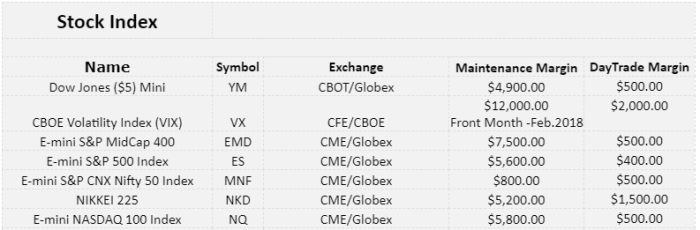
In the world of futures trading, margin calls are a crucial aspect that traders must understand. A margin call occurs when the equity in a trader’s account falls below the required maintenance margin, prompting the broker to demand additional funds to restore the minimum margin requirement. This process highlights the inherent risks associated with trading on margin, and its implications can significantly impact a trader’s financial stability and decision-making process.Triggers for a margin call typically include significant market fluctuations that adversely affect a trader’s positions.
When the value of an asset declines sharply, the equity in the trading account diminishes, often triggering a margin call. This situation compels the trader to either deposit additional funds into their account or close out positions to meet the required margin levels. The entire process underscores the importance of keeping a close eye on market movements and understanding one’s own financial limits.
Consequences of Failing to Meet a Margin Call
Failing to meet a margin call can have severe repercussions for a trader. When a trader does not provide the required funds or fails to close positions in a timely manner, the broker will typically take action to safeguard their interests. This may include liquidating some or all of the trader’s positions to cover the margin shortfall. The following are key consequences of not addressing a margin call:
- Liquidation of Positions: Brokers may automatically sell off assets to recover owed funds, potentially at a loss to the trader.
- Increased Financial Risk: Failing to meet margin calls can lead to increased risk exposure and substantial financial losses.
- Loss of Trading Privileges: Repeated failures to meet margin calls may result in restrictions on trading or increased margin requirements in the future.
- Impact on Creditworthiness: A history of unmet margin calls can affect a trader’s relationship with brokers and their ability to secure future credit or trading opportunities.
Hypothetical Scenario Illustrating Margin Call Implications
Consider a trader, Alex, who has a futures position valued at $50,000, using a margin of 10%. This means Alex initially deposited $5,000. However, due to unfavorable market conditions, the value of the position drops to $40,000. The required maintenance margin is set at 5%, which translates to a minimum equity level of $2,000. With the current position value, Alex’s equity has fallen to $1,500, triggering a margin call from the broker.To rectify the situation, Alex must deposit an additional $500 into the account.
However, if Alex fails to respond to the margin call promptly, the broker may liquidate part or all of the position, likely resulting in a financial loss. In this scenario, Alex’s decision to ignore the margin call not only diminishes the initial investment but also could lead to a loss of future trading opportunities or a damaged credit rating with the broker.This example illustrates the importance of actively managing positions and being responsive to margin calls in the fast-paced futures trading environment, where market volatility can quickly turn favorable trades into potential losses.
Related Concepts in Investing
Margin trading is a fundamental concept in both futures and stock trading, yet they operate under different mechanisms and risk profiles. Understanding these differences is crucial for investors who seek to leverage their investments effectively. In futures trading, margin is often more complex, involving not just the initial investment but also the potential for significant fluctuations in asset value within short periods.
This can lead to varied implications for risk management and investment strategies compared to traditional stock margin trading.
Comparison of Margin Trading in Futures and Stocks
Margin trading in stocks typically allows investors to borrow funds from a broker to purchase more shares than they could otherwise afford, creating the possibility for higher returns. The initial margin requirement is generally around 50% of the purchase price, although this can vary by broker. In contrast, margin in futures trading operates differently, as it requires a smaller percentage of the total contract value as margin.
This is often around 5-15%, making it possible for traders to control a significant amount of assets with a relatively small capital outlay. The primary distinction lies in the level of risk and volatility. Futures contracts are inherently riskier due to their reliance on underlying asset prices, which can change dramatically within short time frames. This can result in larger gains or losses compared to stocks, leading to a more critical focus on risk management in the futures markets.
Relationship Between Futures Trading, Day Trading, and Risk Management
Futures trading and day trading are intertwined, as both rely on short-term price movements to generate profits. Day traders often employ margin to maximize their position sizes, similar to futures traders. However, the volatility associated with futures can lead to rapid margin calls, requiring traders to manage their positions diligently. Risk management becomes paramount in this context. Utilizing stop-loss orders, diversifying positions, and maintaining adequate margin levels can help mitigate potential losses.
The leverage available in futures trading amplifies both potential gains and losses, necessitating robust risk management strategies to protect capital.
Interaction Between Futures Trading, Mutual Funds, and Retirement Planning
Futures trading can play a complementary role in mutual fund management and retirement planning. Many mutual funds utilize futures contracts to hedge against market risks, manage cash flows, or gain exposure to certain asset classes without directly purchasing the underlying assets. This strategy can enhance returns while protecting against downturns.In retirement planning, futures can serve as a tool for portfolio diversification.
By incorporating futures contracts into an investment strategy, individuals can potentially hedge against inflation or other market uncertainties. This approach requires careful consideration of the associated risks, as the leverage in futures trading can impact overall portfolio volatility. In summary, the dynamics of margin trading in futures compared to stocks, the interplay between futures and day trading, and their effects on mutual funds and retirement planning showcase the multifaceted nature of investing.
Understanding these relationships enables investors to navigate the complexities of the financial markets more effectively.
Final Summary
In summary, grasping how margin works in futures trading is fundamental to leveraging your investments while managing risks effectively. By understanding margin requirements, calculations, and the implications of margin calls, traders can navigate the futures market with greater confidence. With the right strategies and insights, trading on margin can be a powerful tool in your investment arsenal.
Q&A
What is margin in futures trading?
Margin in futures trading is a security deposit required to open and maintain a position in a futures contract, allowing traders to control larger positions with a smaller amount of capital.
What are the risks of trading on margin?
The risks include the potential for significant losses exceeding the initial investment, margin calls requiring additional funds, and increased volatility in trading positions.
How can I calculate my margin requirements?
You can calculate margin requirements by multiplying the contract size by the margin rate set by the exchange or broker.
What happens if I receive a margin call?
If you receive a margin call, you must deposit additional funds into your account or close positions to bring your equity back above the required maintenance margin level.
How does margin trading in futures compare to stocks?
Margin trading in futures often requires lower capital and allows for larger leverage compared to stocks, but it also comes with higher risks due to the nature of futures contracts.